Caring for Your Heart When You Have a Stent
You were in the hospital for a blockage in your coronary artery. Your doctors placed a stent to keep the artery open. You will need to take steps to prevent more blockage or heart problems. This sheet tells you what you can do to help keep your heart healthy. It also tells you what to do if you have problems.
How can I help keep my heart healthy?
-
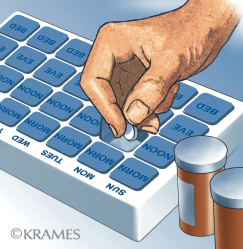
Take all the medicines your doctor prescribed as directed. Tell us if you cannot take them for any reason. Please do not stop taking any of them before you speak with your doctor.
-
Keep all of your doctor appointments.
-
Stop smoking and being around others who smoke.
-
Eat foods that have low fat. Some good choices are fruits, vegetables, low fat milk, low fat cheese, fish, and chicken.
-
Do not eat foods that have high fat. Avoid fatty red meats, processed foods, or deep fried foods.
-
If you have high blood pressure, avoid salt.
-
If you have diabetes, check your blood sugar each day. Work with your doctors to keep it in a healthy range.
-
Join the Gill Heart Institute's Cardiac Rehab Program as soon as your doctors give their OK.
|
|
Why is it important that I do all these things?
-
If you do not take your medicines, your stent may clog. This could cause a heart attack.
-
Smoking or breathing tobacco smoke can cause more heart and lung problems.
-
Eating healthy foods and controlling your blood sugar can improve the health of your arteries. This can lower your risk of a heart attack.
-
Eating salty foods can raise your blood pressure. Eating less salt is good for your heart.
-
In a cardiac rehab program, a team will help you prevent new heart problems.
How can I reach the Gill Heart Institute?
-
You can call the Gill Heart Institute anytime you need to 24/7.
-
Monday– Friday, 6 a.m.-6 p.m., call 859-323-4040. Weekdays after 6 p.m., weekends, and holidays, call 1-800-888-5533 and ask for the cardiologist on call.
When should I call the doctor?
Call us if you have any of these problems:
-
You have questions about your medicines.
-
Your have chest, arm, or neck discomfort.
-
You have a painful headache.
-
You use more nitroglycerin than usual.
-
Simple activities leave you short of breath or very tired.
-
You gain 3 or more pounds over a few days.
-
The place where the catheter went in is red, painful, or swollen.
-
The place where the catheter went in bleeds, drains fluid, or feels warm.
-
You have a change in your vision or balance.
-
You lose feeling in your face, arms, or legs.
When should I call 911?
Call 911 right away if you have any of these:
-
Chest pain or discomfort that does not go away after 3 doses of nitroglycerin.
-
The catheter site bleeds and you cannot stop it. Apply pressure with 2 fingers while you wait for the ambulance. Do not drive!
-
You cannot catch your breath while resting.
-
Your arm or leg is painful, numb or cold.
-
You feel faint or dizzy.
-
Your heart feels like it is beating fast while you are at rest.